

Your laboratory may have robust and comprehensive operating procedures but inevitably, at some point, things will go wrong and nonconformance will occur. Section 7.10 of ISO 17025 details the requirements of controlling nonconforming work.
One of the most important aspects of this process is conducting root cause analysis (RCA) – a thorough assessment of the issue to determine how and why something happened. This must be a comprehensive investigation of all the circumstances and not just a cursory summary such as ‘it was human error’. Digging down into the detail is vital and a good rule of thumb is to aim for ‘5 Whys’, i.e. continue to ask why until the root cause has been identified.
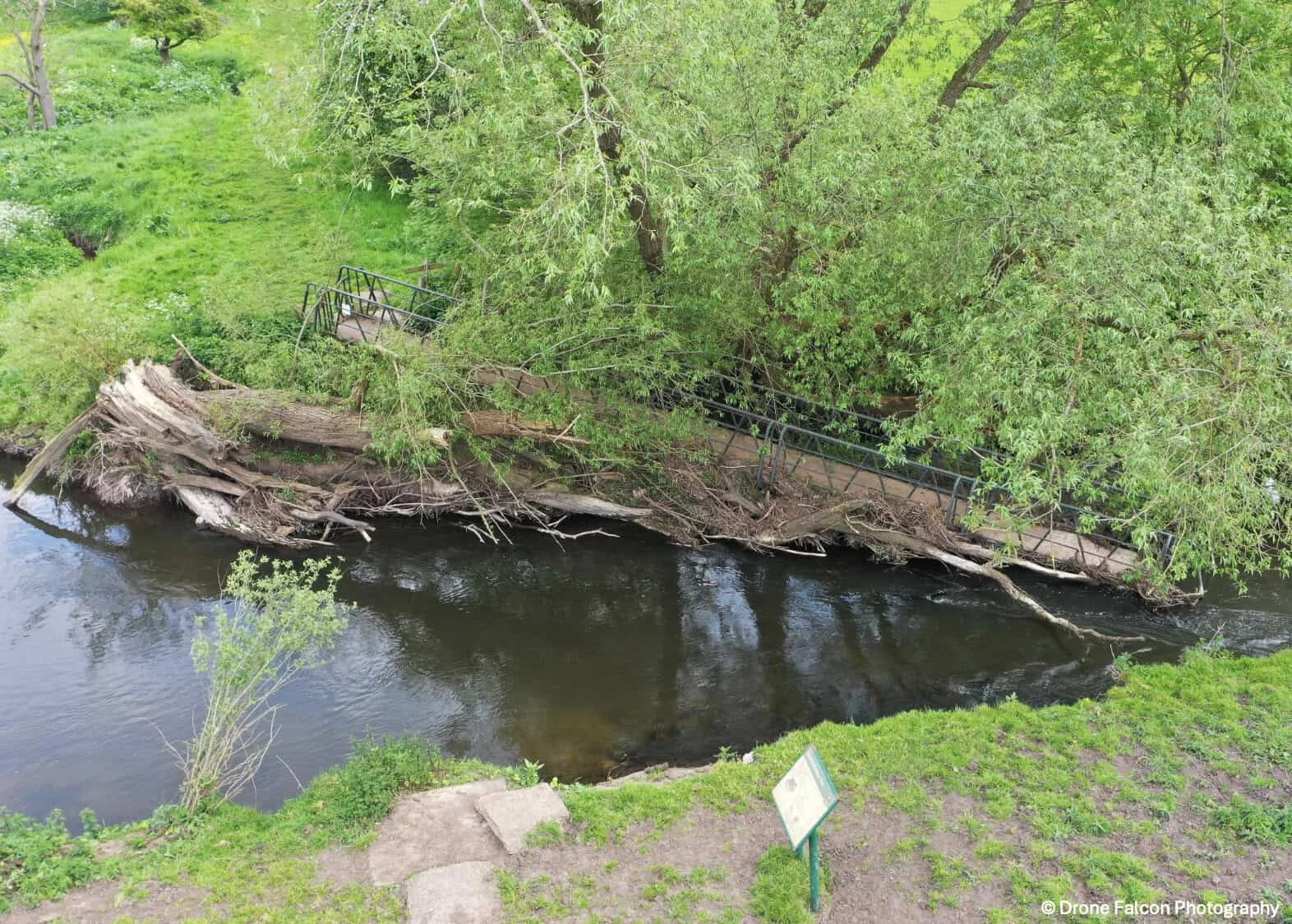
Using the above image as an example (until recently, this was a bridge on our local footpath over the River Trent), what might we establish from our RCA? (This is not an exhaustive list).
Q. Why has the bridge collapsed?
A. A large tree has fallen down and crashed into the bridge.
Q. Why did the tree fall down?
A. A strong wind blew the tree over.
Q. Strong winds are common, why has the tree fallen this time?
A. Riverbank erosion has exposed and weakened the tree roots in recent months.
Q. What has caused this erosion?
A. Intense conveyance work on the river upstream combined with unprecedented levels of rainfall has significantly increased water flow.
Q. Are there any other contributory factors?
A. The erosion has also weakened the bridge footings which were set into the side of the riverbank.
Whilst we must all strive to produce the highest standard of work we can, organisations should recognise that nonconformance will happen. Using methodology such as the 5 Whys model, facilitates a thorough RCA which in turn, helps to identify corrective and preventive actions, enabling you to treat them as an opportunity to improve processes, whilst reducing the risk of the same issue reoccurring.